Struggling to get a clear price for your custom plush toy idea? Quotes can be confusing, and hidden costs can quickly derail your budget before you even begin production.
The cost to manufacture a plush toy depends on material choices, design complexity, order quantity, and safety testing, typically ranging from a few dollars to over $15 per unit. A detailed breakdown from your supplier is key to understanding the final price.
Getting a single number for "cost" is rarely helpful because every custom project is unique. The price for a simple, small beanbag toy will be worlds apart from a large, complex character with multiple embroidered parts and custom packaging. But don't worry. I'm going to break down all the factors that influence your cost, so you can design your product with your budget in mind and know exactly what to ask your manufacturing partner.
How Do You Budget for Plush Manufacturing from a Single Sample to Full Production?
You get a great unit price, but then the costs start adding up. Sample fees, tooling charges, and unexpected testing costs can throw your entire budget out of whack.
To budget effectively, you must understand the core cost components: materials, labor, sample development, testing, and packaging. A good manufacturer will amortize one-time costs like sampling plates into the bulk order, significantly reducing your upfront investment.
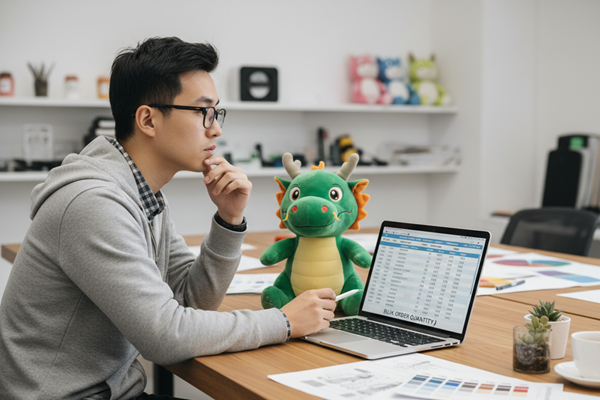
When I work with designers, my first goal is to provide total transparency on pricing. A quote shouldn't be a mystery. It should be a clear roadmap that shows you where every dollar is going. By understanding how each decision affects the price, you can make smart choices to balance quality with cost-effectiveness. Let's look at the main drivers you'll see in a detailed quote.
Key Cost Components in Your Quote
The price you pay is a sum of several distinct parts. Optimizing your design can directly influence some of these costs. For instance, simplifying a complex shape to have fewer fabric pieces can reduce both material waste and labor time. Similarly, choosing detailed embroidery over a plastic part not only changes the feel of the toy but can also alter the production cost.
| Cost Component | What It Covers | How to Optimize It |
|---|---|---|
| Material Costs | Fabric, stuffing, thread, and accessories like eyes or ribbons. | Select materials that fit your brand's quality and price point. |
| Labor & Craftsmanship | The time and skill required for cutting, sewing, embroidery, and assembly. | Simplify the design by reducing seams or choosing efficient techniques. |
| Sample Development | Creating the initial prototype, including tooling for die-cutting or embroidery. | Confirm the factory can amortize these fees into the bulk order cost. |
| Testing & Compliance | Third-party lab tests to meet safety standards (e.g., EN71, ASTM). | Discuss required certifications for your market early in the process. |
| Packaging | Inner/outer boxes, labels, barcodes, and any custom printing. | Choose standard packaging or minimalist designs to reduce costs. |
What Hidden Costs Can Impact Your Plush Toy Budget?
You've approved the per-unit cost, but the final invoice is much higher. Surprise fees for shipping, handling, and small order runs can completely destroy your profit margin.
Hidden costs often come from logistics, tariffs, and order scale. Plush toys have high volumetric weight, making shipping expensive. Strategies like vacuum packaging, meeting the MOQ, and planning for annual orders can dramatically reduce these surprise expenses.
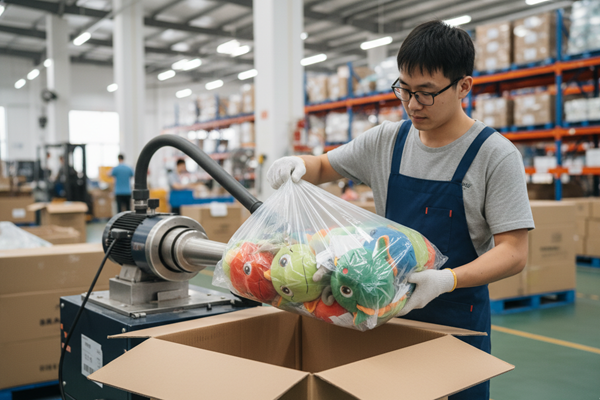
Logistics are probably the biggest source of "hidden" costs in this industry. Plush toys are lightweight but bulky, and international carriers charge based on a metric called volumetric weight. This means a large, fluffy toy can cost as much to ship as a much heavier, smaller item. As a manufacturer, part of my job is to help you anticipate and manage these costs so there are no surprises when it's time to ship.
One of the most effective ways we combat high shipping costs is with vacuum compression packaging. By carefully compressing the plush toys, we can fit more units into a single carton, significantly reducing the volumetric weight and, therefore, your freight bill. Another factor is the Minimum Order Quantity (MOQ). Placing an order below the factory's MOQ often results in a surcharge because the setup costs are the same for 500 pieces as for 2,000. For new products, I usually see initial orders between 1,000 and 3,000 units.
From Single Orders to Strategic Partnerships
As your brand grows, you can unlock more savings. Instead of placing several small, individual orders throughout the year, we can work together on an annual or quarterly contract. By sharing your sales forecast with us, we can purchase raw materials in bulk and lock in lower prices. This protects you from price fluctuations in the market and gives us the stability to offer you a better, more consistent rate. It turns a simple transactional relationship into a true manufacturing partnership.
Does Where You Manufacture Affect the Final Cost?
You're tempted by the low labor costs advertised in some countries, but you're worried about quality, communication, and supply chain reliability. Is the cheapest option always the best?
Yes, your manufacturing region drastically affects the total cost and project risk. While Southeast Asian countries may have lower labor costs, China offers a more mature and integrated supply chain, faster response times, and stronger design capabilities, which often leads to better overall value.
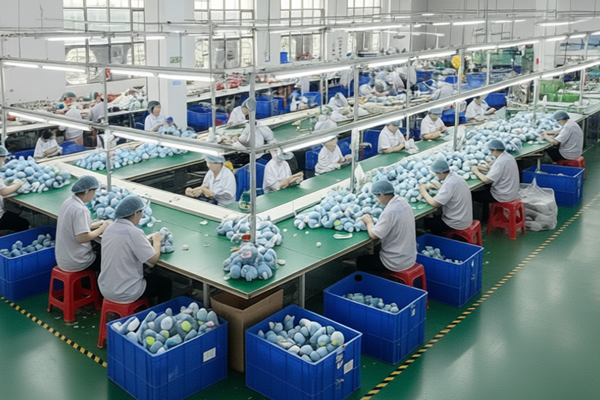
I've seen many companies chase the lowest possible labor cost, only to run into major issues with quality control, missed deadlines, and communication barriers. The unit price is just one part of the equation. You have to consider the total cost of ownership, which includes the risk of delays and the impact on your inventory turnover. A cheap product that arrives late or has a high defect rate is far more expensive in the long run.
The Value of a Mature Supply Chain
China's advantage lies in its incredibly developed and centralized supply chain. Here at PlushMake, we can source high-quality, certified materials from trusted suppliers in a matter of days, not weeks. Our access to skilled labor and advanced machinery means we can handle complex designs and scale production quickly. This speed and reliability are critical for keeping your project on schedule and allowing you to respond faster to market demand.
More Than Just a Factory
Another key difference is the level of service. Many factories in other regions operate purely on a "we build what you send us" model (OEM). In China, experienced manufacturers like PlushMake have strong ODM (Original Design Manufacturer) capabilities. This means we have our own in-house design teams that can collaborate with you, suggest improvements to your design for better manufacturability, and provide creative solutions. This partnership approach helps you create a better, more cost-effective product.
Conclusion
In short, understanding the costs of plush toy manufacturing requires looking beyond the unit price to factors like design complexity, order quantity, logistics, and your choice of manufacturing partner. For extra price and other order details about your plush products, please contact us for details.