
MOQ & Costing
A practical guide to minimum order quantities and cost structure in professional plush OEM/ODM — so you can launch with the right quantity, budget, and compliance scope.
Why MOQ Matters in Plush Manufacturing
MOQ is not a “rule of thumb” — it’s the point where setup + materials + QC + logistics become economically viable, while maintaining consistent quality and compliance.
Cost Structure (What You’re Really Paying For)
Pattern + prototype workflow + tooling & production setup (e.g., embroidery programs, placement tests).
Fabric type, size, embroidery/printing, accessories, stitching steps, packaging spec, and defect tolerance.
Incoming material checks, in-line inspections, needle detection, final AQL sampling, rework control.
Polybag/carton spec, inserts, labeling, compliance marks, carton tests, and shipping mode planning.
💡 Key Insight
Setup costs are “fixed”. At low quantities, setup dominates your unit cost. At higher quantities, setup amortization makes professional QC and compliance feasible without destroying margins.
Note: Figures and ranges on this page are illustrative references. Final pricing depends on BOM, workmanship, packaging, compliance scope, and schedule.
MOQ Tiers & Pricing (Closed-Loop)
A buyer-friendly view: Unit cost + setup + estimated order value — so the math is transparent.
| Quantity Tier | Unit Cost (EXW, est.) | One-time Setup (est.) | Est. Order Value (EXW) | Best For |
|---|---|---|---|---|
|
1,000 pcs
Entry MOQ (typical)
|
$4.5–$7.5
Depends on size/material/accessories
|
$800–$1,500
Pattern + sampling + setup
|
$5,300–$9,000
(unit × qty) + setup
|
Market test • small brand launch • crowdfunding |
|
3,000 pcs
Recommended
|
$3.8–$6.2
Better material utilization
|
$800–$1,500
Same setup amortized
|
$12,200–$20,100
(unit × qty) + setup
|
Retail launch • stable replenishment • better margin planning |
|
5,000+ pcs
Volume pricing
|
$3.2–$5.5
Factory efficiency kicks in
|
$800–$1,500
Setup becomes small fraction
|
$16,800–$29,000
(unit × qty) + setup
|
Distribution • multi-channel scaling • seasonal programs |
Want your exact MOQ & unit cost?
Send size, target market (US/EU), materials preference, and packaging requirement. We’ll reply with a closed-loop estimate in 24–48 hours.
Tip: If you have a sketch or reference photo, attach it to speed up quoting.
Proof & Compliance Support
Buyers trust documents and processes — not slogans. Here are the proof points you can request.
3rd-party Testing
Support lab testing (CPSIA / ASTM F963 / EN71) scope planning.
Plan compliance →Material Traceability
MSDS / material declarations for fabric, fill, inks, and trims.
Request docs →Common MOQ Misconceptions
The fastest way to waste budget is misunderstanding how manufacturing economics works.
Myth: “Small quantities should be cheaper per unit”
Setup and line changeover costs are fixed. Tiny runs concentrate fixed cost into each unit.
Reality: Low runs can be 3–5× more expensive per unit.
Myth: “MOQ is just manufacturer greed”
MOQ exists because professional QC, stability, and scheduling need viable economics.
Reality: MOQ protects quality and timeline for both sides.
Myth: “I can test the market with 50 pcs”
For true prototypes, cost behaves like “R&D”, not mass production.
Reality: Prototype units can become $20–$50 each.
Myth: “Digital printing removes all setup cost”
Pattern, cutting, sewing, and QC planning still require setup and testing.
Reality: Setup shifts — it doesn’t disappear.
Legitimate Ways to Reduce Costs
Smart cost reduction means optimizing design + materials + process — without breaking quality and compliance.
Optimize Design Complexity
- •Reduce fabric colors & panels
- •Replace hard accessories with embroidery when possible
- •Standardize sizes across a collection
- •Plan packaging early to avoid redesign
Increase Effective Volume
- •Order 3,000+ to amortize setup
- •Bundle SKUs using shared fabric/trim
- •Plan replenishment schedule in advance
- •Align launch calendar with production slots
Smart Material Choices
- •Pick readily available fabric types
- •Use standard fill unless spec requires otherwise
- •Balance softness vs. durability vs. washability
- •Define compliance scope early (US/EU)
⚠️ What Won’t Work
Unrealistic Expectations
- • Expecting 100-unit pricing at 1,000-unit MOQ
- • Premium materials with budget tier targets
- • Complex details “free of charge”
Process Shortcuts
- • Cutting QC/testing scope to save money
- • Using non-certified materials for children’s products
- • Rushing production below safe lead times
Latest MOQ & Costing Insights
Deep dives on manufacturing economics, compliance costs, and pricing levers.
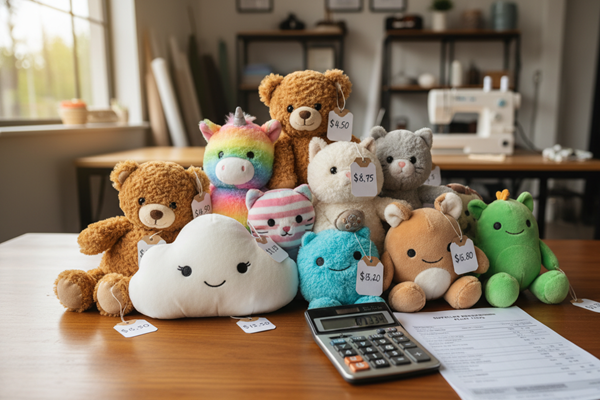
How much does it cost to manufacture plush toys?
Struggling to get a clear price for your custom plush t […]
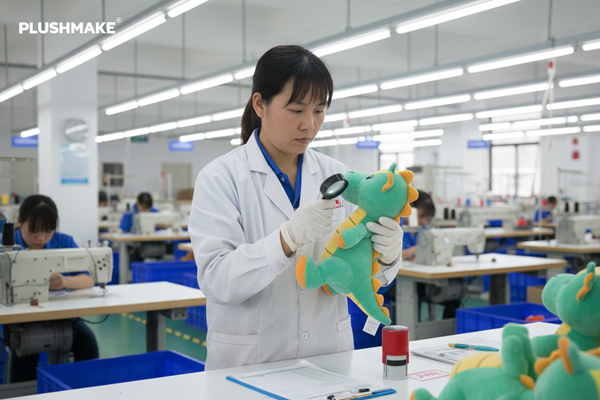
How do I ensure the quality and safety of wholesale plush toys?
Worried your wholesale plush toys could harm your brand […]
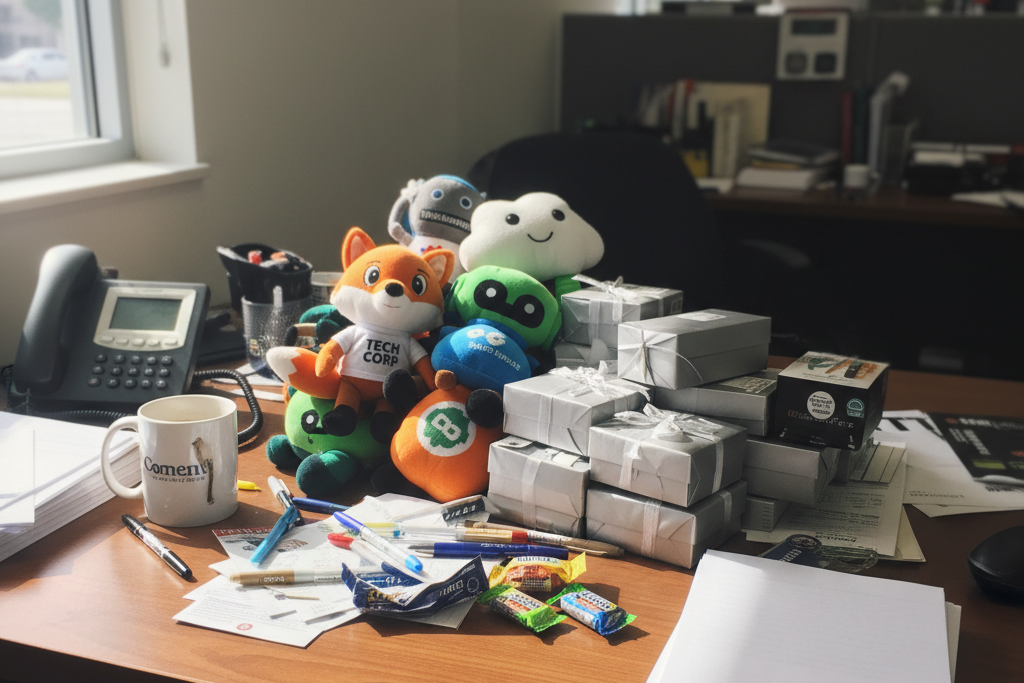
How Can Plush Products Boost User Goodwill for Corporate Gifts?
Tired of giving corporate gifts that feel cheap and are […]
FAQ: MOQ & Costing
Quick answers buyers ask most. If you have a special case, send your spec and we’ll advise.
Can you do 200–500 pcs?
What is included in “setup cost”?
Can I mix SKUs to meet MOQ?
Does compliance testing increase cost?
What affects unit cost the most?
How fast can you quote?
Ready to get accurate pricing?
We’ll return a transparent estimate including MOQ recommendation, setup, unit cost drivers, and compliance scope.
Proof available on request: BSCI/social audit • QC checkpoints • material declarations • 3rd-party testing support.